
Subcision
A fine needle releases the fibrous bands that pull rolling scars downwards, letting the skin rise and new collagen fill the space.
A staged acne scar program at Nest Clinic — subcision, fractional CO2 and Potenza microneedling, combined by our women doctors according to the type and depth of each scar to smooth texture gradually and safely.

Most acne scars improve with a combination of treatments matched to scar type. At Nest Clinic we release tethered rolling scars with subcision, resurface boxcar and icepick scars with fractional CO2 laser or focal peels, and remodel collagen with Potenza RF microneedling. Most patients need 3–5 sessions about 4–6 weeks apart. Scars typically soften and become less visible rather than disappearing, and results vary with skin type and scar depth.
Acne scars form when deep, inflamed breakouts damage the collagen beneath the skin. As the wound heals, the body either produces too little collagen, leaving a depression (atrophic scars such as icepick, boxcar and rolling scars), or too much, creating a raised scar. Picking, delayed treatment and cystic acne all increase the risk.
True scars are different from flat brown or red marks left after a spot, known as post-inflammatory hyperpigmentation, which fade with toning rather than resurfacing. Most faces show a mix, so we map each scar type before planning.
No single device treats all acne scars. Your doctor combines these methods according to the scars on your face and your skin tone.
A fine needle releases the fibrous bands that pull rolling scars downwards, letting the skin rise and new collagen fill the space.
Microscopic columns of resurfacing stimulate collagen and soften boxcar and shallow scars — energy is adjusted carefully for darker skin tones.
Radiofrequency delivered through fine needles remodels collagen deep in the dermis with less surface downtime, and suits skin prone to pigmentation.
A precise, doctor-applied chemical peel inside narrow icepick scars encourages them to fill from the base upwards.
Regenerative boosters after resurfacing support repair, calm redness and help the skin recover faster between sessions.
Once deeper scars improve, gentler care for enlarged pores and overall texture refines the finish.
Drag the handle to compare. Acne scars soften gradually as new collagen forms over several months.
Illustration for explanation only — not a patient photograph. Individual results vary; real case photos are shown during your consultation.
Redness, swelling, pinpoint bleeding and fine crusting for several days are expected after resurfacing and microneedling, and subcision can leave bruising for 1–2 weeks. Uncommon risks include post-inflammatory darkening (more likely in darker skin), prolonged redness, infection, cold-sore reactivation and, rarely, new scarring.
We reduce these risks with conservative energy settings, staged sessions, sterile technique, pigment-prevention care and clear aftercare instructions in English.
Angled lighting and imaging to classify each scar type.
Methods and session order chosen for your scars.
Topical anaesthetic for about 30–40 minutes.
Subcision, laser or microneedling as planned.
Calming boosters, sunscreen and aftercare guidance.
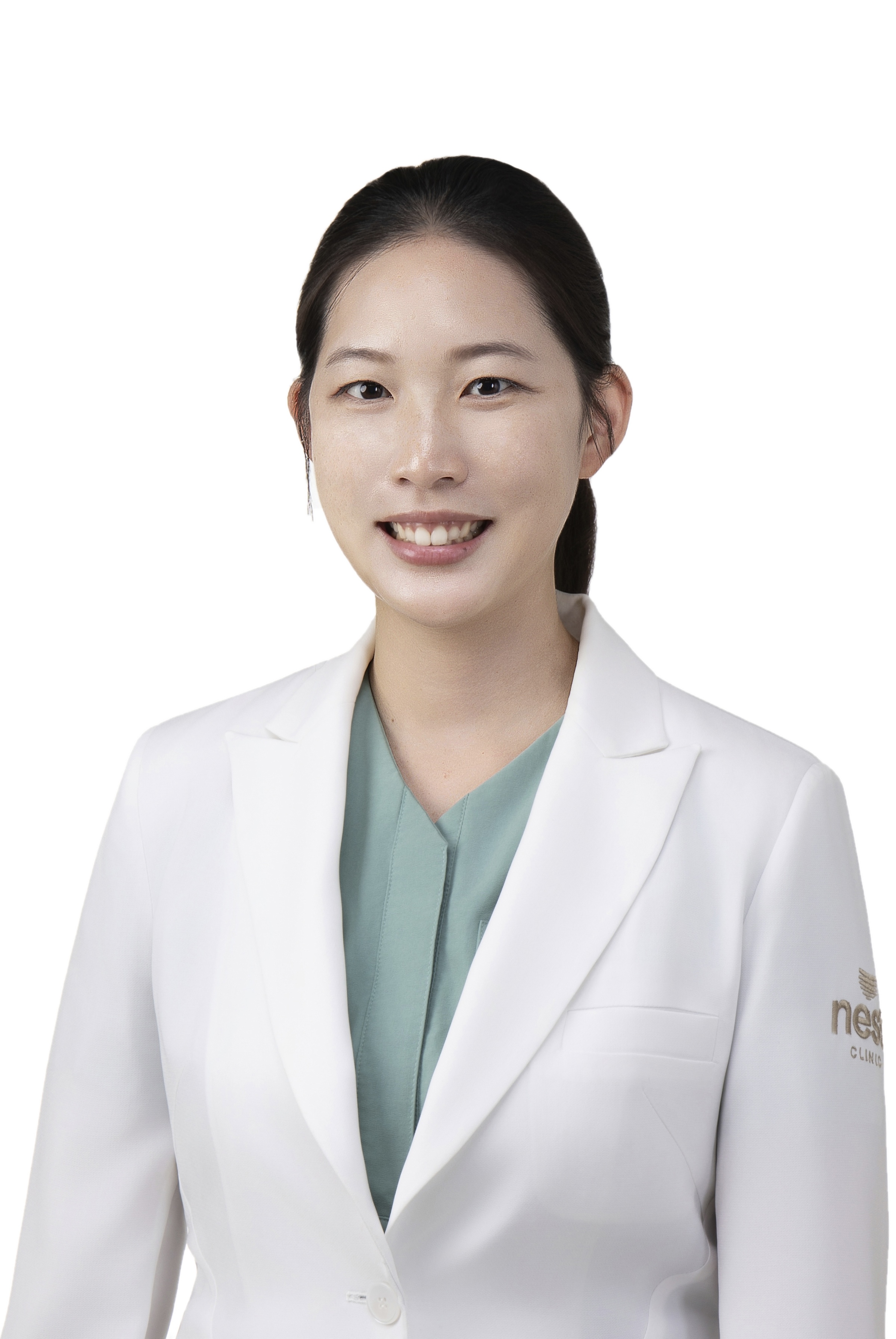
Dr. Song graduated from Seoul National University College of Medicine and is a member of Korean societies for laser, skin and hair medicine and aesthetic medicine. She focuses on skin-quality treatments — lasers, acne and pigmentation care. Nest Clinic is led entirely by women doctors, with one-to-one consultations.
This page was medically reviewed by Dr. Hee-in Song in October 2026. It is for general information and does not replace an in-person diagnosis.
Send a photo on WhatsApp for a first opinion in English, then book a scar assessment with our doctors.
Nest Clinic Gangnam · 4F–5F Seocho Building, 453 Gangnam-daero, Seocho-gu, Seoul
Sinnonhyeon Station Exit 7 · Gangnam Station Exit 10
Mon–Fri 10:00–20:00 · Sat 10:00–17:00 · Sun closed
Results differ from person to person. All medical procedures carry potential risks and side effects; a doctor will explain them before treatment. Information on this page is educational and not a substitute for a personal medical consultation.
✨ Personalized Skin Consultation – Start Your Journey to Healthier Skin!
📋 Takes Less Than 30 Seconds!
🧑⚕️ Reviewed by Certified Dermatology Specialists
🌎 English Support Available

Address: 4th and 5th Floor, Seocho Building, 453 Gangnam-daero, Seocho-gu, Seoul, South Korea