
Nasolabial filler
Small amounts of a soft, flexible hyaluronic acid filler such as Juvéderm, Restylane or Belotero placed along the fold to soften it while keeping movement natural.
Softer smile lines without losing your natural expression — our women doctors combine precise hyaluronic acid filler, collagen stimulation and lifting to treat the cause, not just the crease.

Smile lines (nasolabial folds) usually respond to a combination: hyaluronic acid filler to soften the fold, plus support for the mid-cheek, where volume loss often deepens the line. At Nest Clinic we may add Sculptra for gradual collagen or ultrasound lifting such as Ulthera for laxity. Filler effects are visible immediately and typically last 9–18 months; results vary with skin quality, age and lifestyle.
Smile lines run from the sides of the nose to the corners of the mouth. Everyone has them to some degree — they are where the cheek meets the lip. They become deeper with age as the mid-cheek fat pads lose volume and descend, skin collagen thins and ligaments loosen.
Because the cause is often above the line itself, filling only the crease can look heavy. Our doctors assess the cheek, jawline and skin quality together, and also look at related concerns such as marionette lines and loss of facial volume.
Your doctor chooses from these options depending on how deep the fold is and what is driving it.
Small amounts of a soft, flexible hyaluronic acid filler such as Juvéderm, Restylane or Belotero placed along the fold to soften it while keeping movement natural.
Restoring volume high on the cheek lifts the tissue that falls into the fold — often more effective than filling the line itself. See cheek fillers.
Poly-L-lactic acid builds your own collagen gradually over 2–3 sessions for a subtle, longer-lasting improvement in support.
Ulthera or Ulthera Prime targets the deeper SMAS layer to tighten lax tissue around the lower face, with gradual change over 2–3 months.
Thermage FLX, XERF or Oligio heat the dermis to firm skin and improve crepiness around the mouth.
Rejuran or Skinvive improve hydration and elasticity so the surface line looks softer and fine creases are less visible.
Drag the handle to compare. The aim is a gentler transition from cheek to mouth, not an erased or flat smile.
Illustration for explanation only — not a patient photograph. Individual results vary; real case photos are shown during your consultation.
Swelling, tenderness, redness and small bruises at injection points are common and usually settle within 3–7 days. Uncommon risks include lumps, asymmetry, infection and delayed inflammatory reactions.
A rare but serious risk of any filler is blockage of a blood vessel. We reduce risk with detailed anatomical knowledge, cannula techniques where appropriate, slow low-pressure injection, and hyaluronidase on hand to dissolve hyaluronic acid filler immediately if needed.
Your doctor analyses cheeks, folds and skin quality.
Filler, collagen or lifting mix agreed together.
Topical anaesthetic for comfort.
Small, measured placement or device passes.
Ice, check of symmetry and written aftercare.
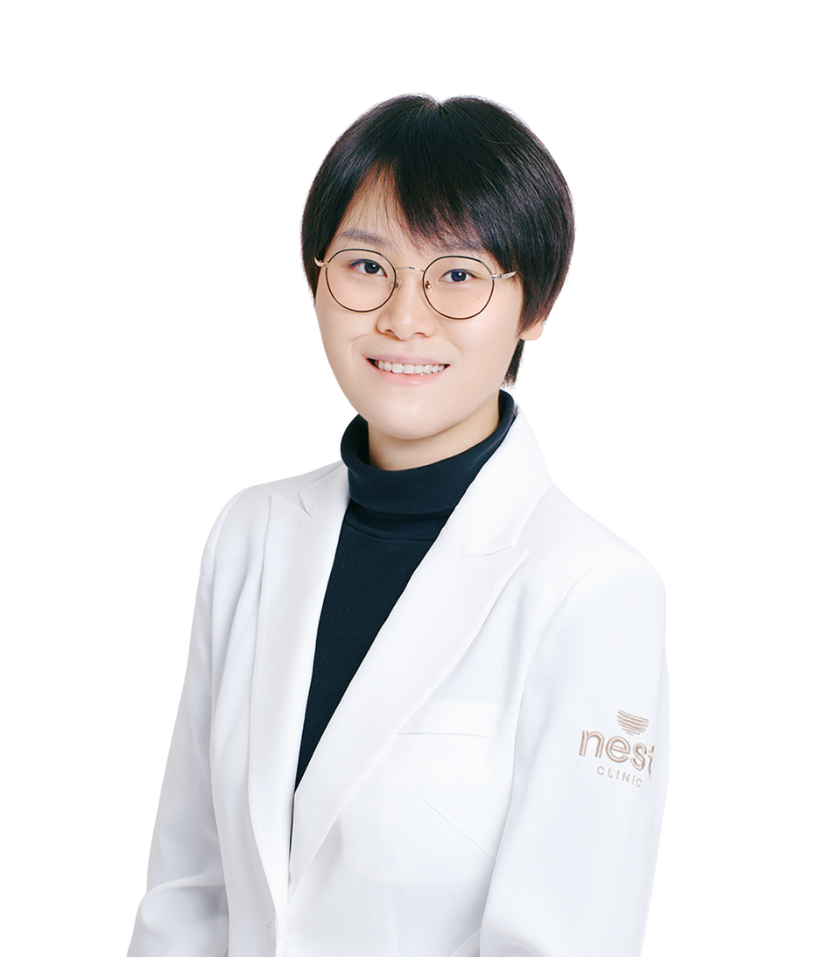
Dr. Lee trained at Seoul National University College of Medicine (M.S.) and completed residency at Seoul National University Hospital. Before joining Nest Clinic she was director at VS Line Clinic in Apgujeong. Nest Clinic is led entirely by women doctors, with one-to-one consultations rather than high-volume treatment.
This page was medically reviewed by Dr. Kyung-yeon Lee in October 2026. It is for general information and does not replace an in-person diagnosis.
Send a relaxed and a smiling photo on WhatsApp for a first opinion in English, then book a face assessment with our doctors.
Nest Clinic Gangnam · 4F–5F Seocho Building, 453 Gangnam-daero, Seocho-gu, Seoul
Sinnonhyeon Station Exit 7 · Gangnam Station Exit 10
Mon–Fri 10:00–20:00 · Sat 10:00–17:00 · Sun closed
Results differ from person to person. All medical procedures carry potential risks and side effects; a doctor will explain them before treatment. Information on this page is educational and not a substitute for a personal medical consultation.
✨ Personalized Skin Consultation – Start Your Journey to Healthier Skin!
📋 Takes Less Than 30 Seconds!
🧑⚕️ Reviewed by Certified Dermatology Specialists
🌎 English Support Available

Address: 4th and 5th Floor, Seocho Building, 453 Gangnam-daero, Seocho-gu, Seoul, South Korea